
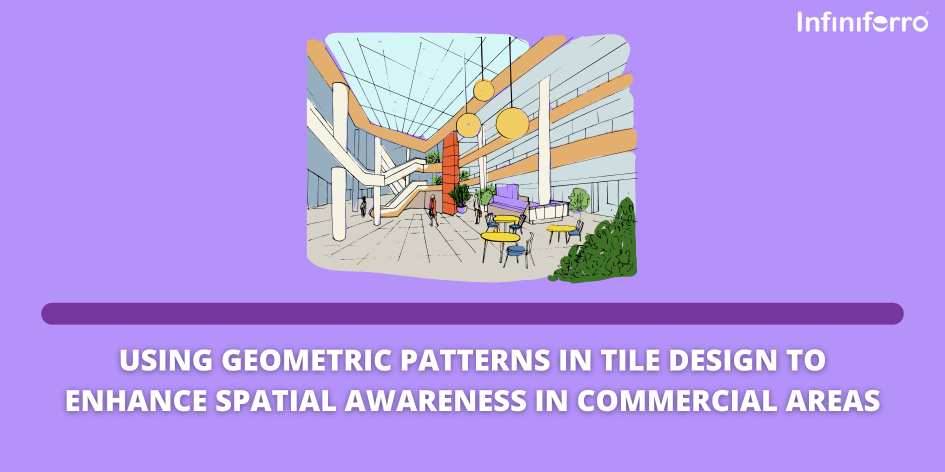
This style of tile design has been integral to commercial architecture, its design being a blend of durability, functionality, and beauty. However, designers often find advantages in geometric patterns in tiles in terms of both psychological and spatial effects. Incorporating gridwork, brilliant linear grid lines, and hexagonal patterns, tile designs featuring geometrical patterns contribute to better spatial orientation, ease of movement, and the establishment of balance in commercial settings.
As a behavioral psychologist and design consultant, Dr. Susan Weinschenk points out:
“Design doesn’t just look good; it tells people how to behave in a space.”
When used in a commercial setting, such as a mall, airport, office complex, or outdoor plaza, a geometric tile pattern can also have immense consequences, not just on aesthetics, but also on wayfinding, safety, and user experience. Incorporating built-in facilities, drainage, maintenance hole covers, and outdoor furnishings, such as garden benches, can enhance such areas and blend design and functionality.
This article will discuss the effects of geometric tile patterns on spatial recognition, why business locations are becoming a favorite of this design, and the role of products such as Terrazzo Tiles in contemporary design trends.
The Spatial Awareness of Geometric Patterns
Humans are innately drawn to using visual cues to coordinate their environment. The repetitive nature of geometric tile patterns and directional movement creates a subtle sense of guidance, helping people navigate and feel at home in a space.
- Directional Guidance: Chevron or herringbone directional patterns provide the eye with a clear direction, making them useful in corridors or walkways where foot traffic should be guided.
- Zoning and Differentiation: A sharp distinction is made between functional areas (e.g., a cafe area in a mall versus a walking corridor) through a distinct tile pattern.
- Perception of Scale: Patterns that are small and repeating can make a room feel larger, whereas very large, bold patterns can cause a space to feel smaller.
According to a study published in the Journal of Environmental Psychology (2022), uniform flooring would only increase wayfinding efficiency by 17% compared to geometric floor patterns in large commercial complexes. And this is what indicates the quantifiable contribution of design to the improvement of human interaction with space.
Commercial Uses
Retail Spaces and Shopping Malls:
Retailers use geometric tiles to draw customers further into the stores. For example, diamond designs can serve as focal points around display units, while linear tile designs guide customers through aisles.
Corporate Offices:
Breaking out spaces in the contemporary workplaces may be characterized by hexagonal tiles arranged in clusters, whereas linear geometric grids may be used to indicate direction towards the meeting rooms. The visual aids enhance both the aesthetic and effectiveness of navigation for employees.
Airports and Transit Hubs:
Airports require wayfinding. Narrowed, lined, or concentric geometric tile patterns can be used to direct high foot traffic without relying solely on signage.
Courtyards and Plazas:
The geometric tiles are also bright outside. In this case, the combination of patterns and practical infrastructure, such as drainage gratings and maintenance hole covers, will provide a balance between safety, functionality, and design beauty.
Terrazzo Tiles: These are Sturdy and Multipurpose
Speaking about geometrical shapes, we should mention Terrazzo Tiles. Terrazzo has a history that dates back to 16th-century Italy, where chips made of marble, quartz, granite, or glass are cemented or filled with resin. This is best suited for commercial areas due to its longevity and flexibility in design.
- Durability: Terrazzo Tiles have the potential to last several decades with minimal maintenance, which minimizes lifecycle costs for businesses.
- Freedom of Design: The material can be used with custom geometric patterns, subtle monochromes, or multi-color designs, featuring both muted and bold colors.
- Sustainability: Terrazzo products are also an environmentally friendly choice because many of them contain recycled aggregates.
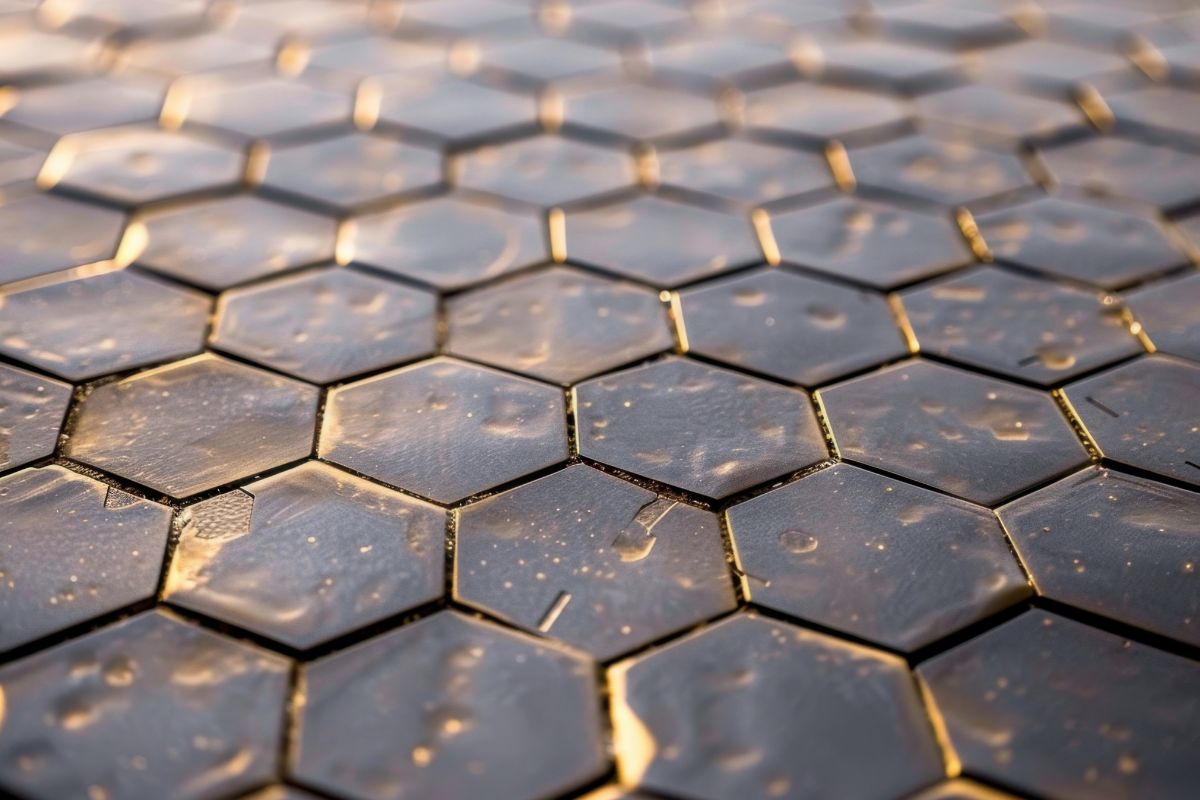
Combination of Functional Products and Geometric Pattern Tile Design
It is not just a beautiful commercial space, but a harmony is formed between it and practical functions, which facilitate everyday activities.
Drainage Systems and Covers on Manholes:
Outside commercial plazas, particularly in areas with heavy rainfall, drainage systems are very important. Historically, the visual interruptions have been gratings and maintenance hole covers. The current designs, however, enable the integration of these elements with tile patterns.
- Pattern Integration: Circular or square covers can be installed into geometric tiling without disrupting the flow.
- Custom Finishes: Laser-cut geometric patterned gratings may be used to reflect the tile pattern of the floor, increasing the continuum.
This unifying feature makes it safe, comfortable, and accessible without hindering aesthetics.
Benches and Furniture Outdoors:
Outdoor commercial spaces are increasingly being developed as multipurpose residential environments. In combination with geometric tile flooring, garden benches, and outdoor furniture, these elements create rest zones that do not disrupt the design.
For example:
- Even floor layouts may be extended to the bases of the benches, allowing seating to be incorporated into the floor design.
- Geometric tile borders can be used in contrast to mark seating areas, which enhances the wayfinding in open areas.
A 2023 survey of urban property managers conducted by the Urban Land Institute found that 70% of them reported greater visitor satisfaction when flooring design was carefully combined with outdoor furniture.
Outdoor Living Areas: Prolonging Commercial applications:
Shopping centers are now investing in outdoor living spaces. Whether it’s a retail courtyard, hotel terrace, or a corporate rooftop, geometric tile patterns bring visual order to these spaces.
Using a combination of Terrazzo Tiles and other features, such as garden benches, drainage, and ornamental gratings, companies can provide long-lasting yet attractive areas that promote lingering. This not only enhances the user experience but also adds commercial value to the property.
Expert Insights:
Architects have long recognized the impact of flooring patterns on human behavior. Architect and author Francis D.K. Ching writes:
“Geometry is the framework upon which we order our environment—it defines boundaries, creates rhythm, and guides perception.”
This point of view is consistent with the findings of studies in commercial psychology, which show a direct correlation between floor patterns and customer dwell time and engagement. In one instance, a 2021 retail study determined that stores with patterned flooring experienced a 12 percent higher customer browsing time than stores with plain flooring.
Striking a Chord between Aesthetics and Functionality
Balance is the secret of success. Although bold patterns are beautiful, they can be confusing or cause visual clutter when overused. The geometry tile best practices in commercial design are:
- Contrast & Highlighting: Patterns should be used to emphasize functional areas without overwhelming the whole floor.
- Integration: Coordinate the placement of maintenance hole covers and gratings with the tile geometry to ensure seamless integration.
- Material Choice: Opt for long-lasting options, such as Terrazzo Tiles, that can withstand heavy traffic.
- Outdoor Flexibility: Embark on outdoor furniture that is resistant to match tile designs.
Conclusion
Geometric tile patterns are more than decorative; they act as a spatial communication system that improves orientation, aesthetics, and human interaction in commercial spaces. When coordinated with real-world elements—drainage channels and gratings, maintenance-hole covers, and garden benches these patterns preserve visual continuity, enhance safety, and make movement intuitive.
Terrazzo and mosaic tiles together deliver the best of both worlds: terrazzo provides seamless, durable, large-field surfaces with broad color control, while mosaics offer small-scale precision for wayfinding icons, thresholds, curves, and high-traction zones. Both support sustainability goals (e.g., recycled aggregates in terrazzo, recycled glass, and long service life in mosaics), helping spaces remain beautiful, resilient, and cost-effective over time.
With growing demand for interactive, easy-to-navigate commercial environments, the integration of geometry with functionality—and the thoughtful incorporation of products like drainage systems, access covers, and site furnishings paired with material strategies that leverage terrazzo and mosaic will continue to define the future of architectural design.
ALSO READ:
Leave a Reply