
“Have you ever wondered why certain plants keep running while others shut down in heat, dust, corrosion, and storms? The answer is not one stronger component. It is a complete industrial power distribution system designed around real operating conditions.”
Industrial facilities such as chemical plants, oil and gas sites, mines, wastewater plants, food processing units, marine terminals, steel mills, and outdoor manufacturing yards operate under conditions that can quickly damage weak electrical infrastructure. Reliable power distribution must account for the full electrical path, from incoming service and transformers to switchgear, cables, protective devices, control panels, and even a single power connector installed in a wet, corrosive, dusty, or vibrating area.
In these environments, failure can stop production, damage motors and controls, create fire hazards, expose workers to electrical risks, and increase maintenance costs. A dependable system is designed for the actual site, not ideal conditions on a drawing.
Reliability in Harsh Industrial Power Distribution System
Reliability means delivering power safely while limiting the effect of faults. A strong distribution system should isolate problems without shutting down the entire facility, protect equipment from environmental stress, and allow maintenance without unnecessary production stoppage.
This depends on proper architecture, suitable ratings, selective coordination, grounding, surge protection, environmental protection, monitoring, and preventive maintenance. A system may appear acceptable during normal operation but fail during humidity spikes, flooding, dust buildup, corrosion, vibration, peak load, or utility disturbances.
Understanding Site Conditions
Harsh environments attack electrical systems in several ways. Moisture weakens insulation and corrodes terminals. Dust restricts cooling and may create conductive paths. Chemicals, salt air, and acidic vapors damage metals, contacts, fasteners, and enclosure surfaces. Heat accelerates aging, while cold can cause condensation.
These risks often combine. A coastal plant may face salt air, storms, humidity, and vibration. A mine may deal with dust, shock, water, and long cable runs. A wastewater facility may face corrosive gases, damp rooms, washdowns, and drainage challenges. Good design starts with a realistic site assessment.
Designing Around Critical Loads
A dependable system begins with a clear load strategy. Some loads can tolerate short interruptions, while others must remain energized to protect people, equipment, and production. Critical loads may include control systems, emergency lighting, fire pumps, communications, PLCs, SCADA equipment, ventilation, alarms, and life-safety systems.
These loads may require UPS backup, surge protection, clean grounding, automatic transfer, standby generation, or separation from heavy motor loads. In many plants, one upstream fault can shut down a large area. Resilient designs may use dual feeders, main-tie-main switchgear, transfer switches, backup generators, UPS systems, and coordinated protective devices.
The aim is to keep essential operations running and prevent a single fault from causing a plant-wide shutdown.
Enclosures, Drainage, and Equipment Protection
The enclosure is the first barrier between electrical equipment and the surrounding environment. IP ratings under IEC 60529 classify protection against dust, water, and access to hazardous parts. NEMA Type 3 supports outdoor protection, while NEMA Type 4X adds corrosion resistance and protection against hose-directed water.
Material selection is equally important. Painted carbon steel may suit dry indoor areas, but stainless steel, fiberglass-reinforced polyester, aluminum, or coated metals may be needed in wet, outdoor, or corrosive locations. Sealed cable glands, sound gaskets, sloped tops, breather drains, and proper gland plates help reduce moisture entry and condensation.
Drainage systems are part of electrical protection, not a separate civil afterthought. Electrical rooms, switchgear pads, transformer areas, cable trenches, and equipment foundations should be arranged so water does not collect near panels, conduits, cable entries, or energized equipment.
Floor slopes, trench drains, sump pumps, raised pads, sealed penetrations, and clear discharge routes help reduce standing water, corrosion, insulation damage, ground faults, and unsafe maintenance conditions. In outdoor, washdown, coastal, and flood-prone facilities, drainage planning should be coordinated with the power distribution layout from the start.
Choosing Equipment for the Environment
Reliable industrial power distribution system depends on equipment that is both electrically correct and environmentally suitable. Switchgear, motor control centers, transformers, panels, busway systems, cables, and protective devices must match real operating conditions.
Transformers should be selected for temperature rise, load profile, harmonics, ventilation, enclosure protection, and access. Switchgear must be rated for fault current, voltage, environmental exposure, and safe operation. Cables, trays, conduits, and supports should be selected to meet moisture, oil, chemical, ultraviolet exposure, mechanical, corrosion, and drainage requirements.
Power Quality, Grounding, Monitoring, and Maintenance
Harsh environments can damage equipment externally, but many failures also begin inside the electrical waveform. Drives, welders, motors, compressors, rectifiers, and switching power supplies can introduce harmonics, voltage dips, poor power factor, nuisance trips, and unstable operation.
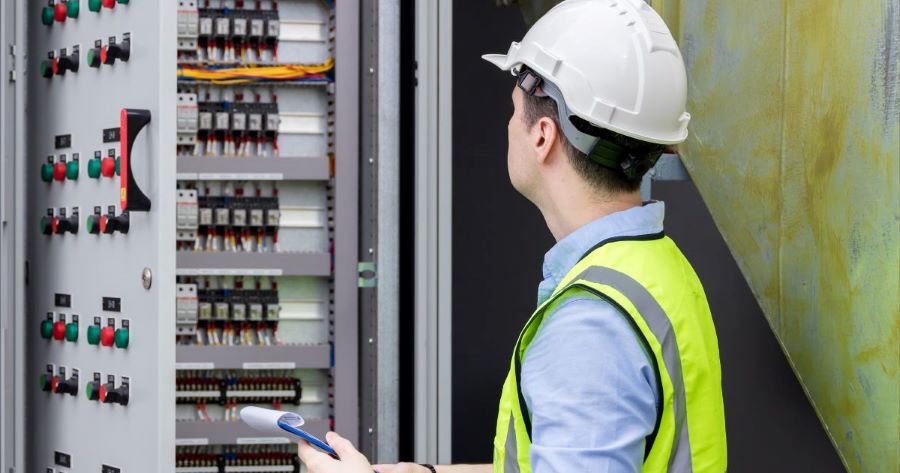
A strong design includes adequate feeder capacity, harmonic mitigation, surge protection, clean grounding, bonding continuity, and separation between power and control wiring. Monitoring helps identify problems early through thermal sensors, intelligent breakers, meters, humidity sensors, vibration sensors, and remote diagnostics.
Maintenance should include gasket checks, torque verification, infrared scanning, cleaning, corrosion inspection, breaker testing, UPS battery testing, surge protection inspection, and verification that ventilation and drainage paths remain open.
Designing for Safety as Well as Uptime
Reliable power distribution is not complete without safety. Harsh environments can increase arc flash risk, shock hazards, fire risk, equipment damage, and the difficulty of emergency response. Safer operation depends on clear labels, arc-flash analysis, coordinated protection, lockout/tagout systems, proper clearances, insulated guards, remote racking, and well-maintained protective devices.
In hazardous locations, equipment must match the classified area and the gas, vapor, dust, or fiber present. Safety planning should also consider emergency shutdown systems, fire pump power, egress lighting, alarms, communications, and backup power for life-safety loads.
Conclusion: Reliability Is Engineered, Not Assumed
Reliable power distribution systems for harsh industrial environments are built through deliberate engineering decisions. Strong systems combine resilient architecture, rated enclosures, corrosion-resistant materials, suitable switchgear, protected transformers, quality cabling, grounding, surge protection, drainage planning, monitoring, maintenance, and safety-focused design.
When architecture, protection, drainage, monitoring, maintenance, and safety work together, the result is safer operation, fewer outages, longer equipment life, lower maintenance costs, and stronger production confidence.
ALSO READ:






Leave a Reply