
Cast iron drainage covers such as manhole covers and drainage gratings are essential components in infrastructure systems. These products are widely used in roads, sidewalks, industrial areas, ports, airports, commercial buildings, and residential projects. Because of their critical function, the manhole covers manufacturing process cannot be done instantly.
Many people assume that making a drainage cover is simply about shaping metal into a product. In reality, the production of cast iron manhole covers and gratings involves a long and detailed metal casting process. Every stage must be carried out carefully to ensure the final product is strong, precise, and durable.
This article explains the complete manufacturing process of cast iron drainage covers and why producing manhole covers and gratings requires considerable time.
What Is Metal Casting?
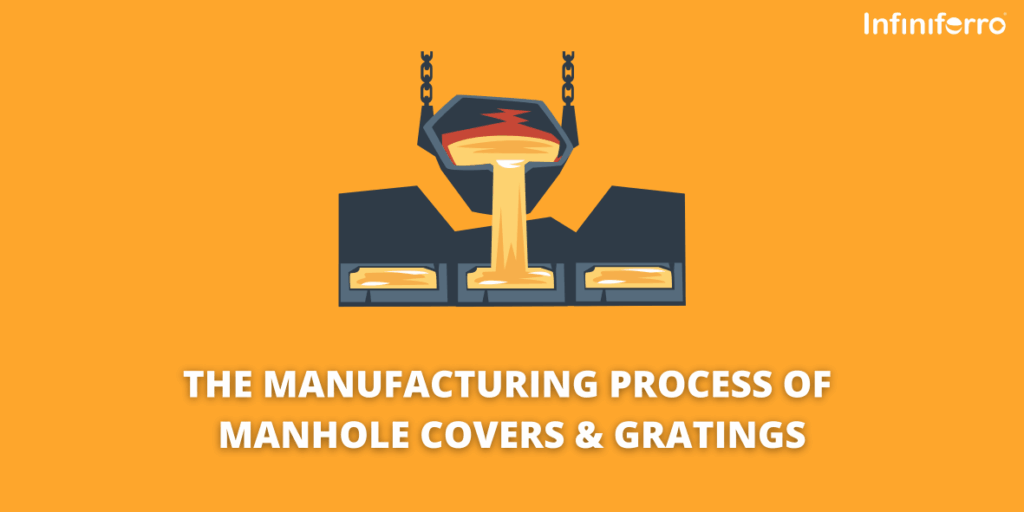
Metal casting is a manufacturing process where metal is melted at high temperatures and poured into a mould to create a desired shape. Once the molten metal cools and solidifies, the casting undergoes additional processing before becoming a finished product.
This method is widely used for manufacturing:
- Manhole covers
- Drainage gratings
- Industrial machine components
- Cast iron pipes
- Decorative metal products
- Heavy-duty industrial spare parts
- Furniture
For drainage systems, cast iron is one of the most commonly used materials because of its excellent strength and durability under heavy loads.
Why Does Manufacturing of Cast Iron Manhole Cover Take Time?
The production of cast iron drainage covers involves multiple stages that must be completed sequentially. Each process requires precision, technical expertise, and proper quality control.
From design preparation and pattern making to sand moulding, metal melting, pouring, cooling, grinding, and finishing — every step contributes to the final product quality.
In addition, the cooling process of cast iron cannot be rushed. Improper cooling may lead to cracks, deformation, or internal defects.
This is why manufacturing manhole covers and cast iron gratings generally takes longer compared to ordinary fabricated products.
The Manufacturing Stages of Cast Iron Drainage: Manhole Covers & Gratings
1. Design and Pattern Making
The process begins with designing the product according to project requirements.
The design stage includes:
- Product dimensions
- Surface patterns and textures
- Custom logos or lettering
- Load class specifications
- Locking systems
- Product thickness
After the design is finalized, a pattern or master model is created. Patterns are usually made from wood, resin, or metal.
This pattern plays a crucial role because it determines the final shape of the casting.
2. Sand Mould Preparation
The next step is sand moulding.
Special casting sand is mixed with binders to maintain the mould structure. The pattern is then pressed into the sand to create a cavity matching the product shape.
The mould typically consists of two sections:
- Upper mould (cope)
- Lower mould (drag)
Once the pattern is removed, an empty cavity remains, ready to receive molten metal.
This stage requires high precision because even small moulding errors can affect the final casting quality.
3. Melting the Cast Iron
After the mould is ready, the cast iron material is melted inside a furnace.
The metal is heated to temperatures exceeding 1,200°C until it becomes molten metal.
During this stage, material composition must be carefully controlled to meet required quality standards.
Several important processes are also performed, including:
- Carbon content control
- Temperature monitoring
- Slag and impurity removal
Metal melting is considered one of the most critical stages in the casting industry.
4. Metal Pouring Process
Once the molten metal reaches the required condition, it is poured into the sand mould through a specially designed gating system.
The pouring process must be handled carefully to prevent:
- Air bubbles
- Porosity
- Cracks
- Incomplete casting formation
The molten metal fills the entire mould cavity and gradually forms the shape of the manhole cover or grating.
Because of the extremely high temperatures involved, this process requires experienced workers and strict safety standards.
5. Cooling and Solidification
After pouring, the product cannot be removed immediately.
The molten metal must cool naturally until it completely solidifies. Cooling duration depends on several factors such as:
- Product size
- Material thickness
- Type of cast iron
- Environmental conditions
Larger and thicker manhole covers usually require longer cooling times.
This stage is essential for maintaining the structural integrity and mechanical strength of the material.
6. Shake-Out Process
Once the casting has cooled, the sand mould is broken apart to remove the product.
At this stage, the casting still contains:
- Residual moulding sand
- Gating and riser sections
- Rough surface areas
Therefore, additional cleaning and finishing processes are required.
7. Grinding and Finishing
The cast product is then cleaned and refined through grinding and finishing processes.
The purpose of grinding is to:
- Smooth the surface
- Remove excess metal
- Trim casting channels
- Refine product edges
Additional finishing processes may include:
- Shot blasting
- Protective coating
- Painting
- Anti-rust treatment
These finishing steps improve both the appearance and corrosion resistance of the product.
8. Quality Control and Laboratory Testing
Before delivery, every manhole cover and grating must pass strict quality control inspections.
Common inspections include:
- Dimensional checks
- Visual inspection
- Load testing
- Material testing
- Cover and frame fitting tests
These tests ensure the products are safe and reliable for real-world applications.
This is especially important for heavy-duty areas such as highways, ports, industrial facilities, and airports.
Manhole Cover Manufacturing Cannot Be Instant
Looking at the many stages involved, it is clear why manufacturing cast iron drainage covers requires significant production time.
Each stage is interconnected and cannot be skipped. Precision throughout the metal casting process directly affects the final product quality.
Rushed production may lead to problems such as:
- Cracks
- Porosity
- Poor dimensional accuracy
- Low load resistance
- Premature failure
That is why professional manufacturers apply strict production standards and quality control procedures to ensure high-quality manhole covers and gratings.
Conclusion: The Manufacturing Process of Cast Iron Drainage Covers is Complex
The manufacturing process of cast iron drainage covers such as manhole covers and gratings is a complex industrial procedure. From design preparation to final finishing, every stage requires technical expertise, precision, and adequate production time.
Through proper metal casting processes, cast iron products achieve excellent strength, durability, and long service life for heavy-duty infrastructure applications.
This is the reason why the quality of manhole covers and gratings is highly dependent on the manufacturing process itself. The better the casting process, the better the performance and reliability of the final product.
ALSO READ:






Leave a Reply