

When rainwater cannot flow away properly, standing water may develop across different areas of the airport. This condition can affect more than just convenience. It can compromise flight safety, damage airport infrastructure, and disrupt daily operations. For this reason, drainage systems must be carefully planned and designed to meet the specific requirements of each airport area.
Drainage is an essential part of airport infrastructure. Its primary function is to collect, control, and channel excess rainwater away from an area to prevent water accumulation. At airports, an effective drainage system is particularly important because flight operations depend on safe and well-maintained surfaces, especially around runways, taxiways, aprons, terminals, and other supporting facilities.
Key Requirements for an Effective Airport Drainage System
An airport drainage system must be capable of collecting and channeling rainwater efficiently, even during periods of heavy rainfall. To achieve this, drainage capacity must be determined based on the size of the catchment area and the expected volume of surface runoff.
The slope of drainage channels and the direction of water flow must also be properly designed to ensure that water reaches the designated discharge points without obstruction. Regular maintenance is equally important to prevent channels from becoming blocked by rubbish, mud, sediment, or other debris.
Aviation safety must remain a priority throughout the planning and construction process. Drainage channels, retention ponds, and other water management facilities must be positioned carefully so they do not interfere with aircraft movements or ground operations within the airside area.
An effective drainage system should therefore do more than remove excess water. It must also support the safety, reliability, and efficiency of airport infrastructure.
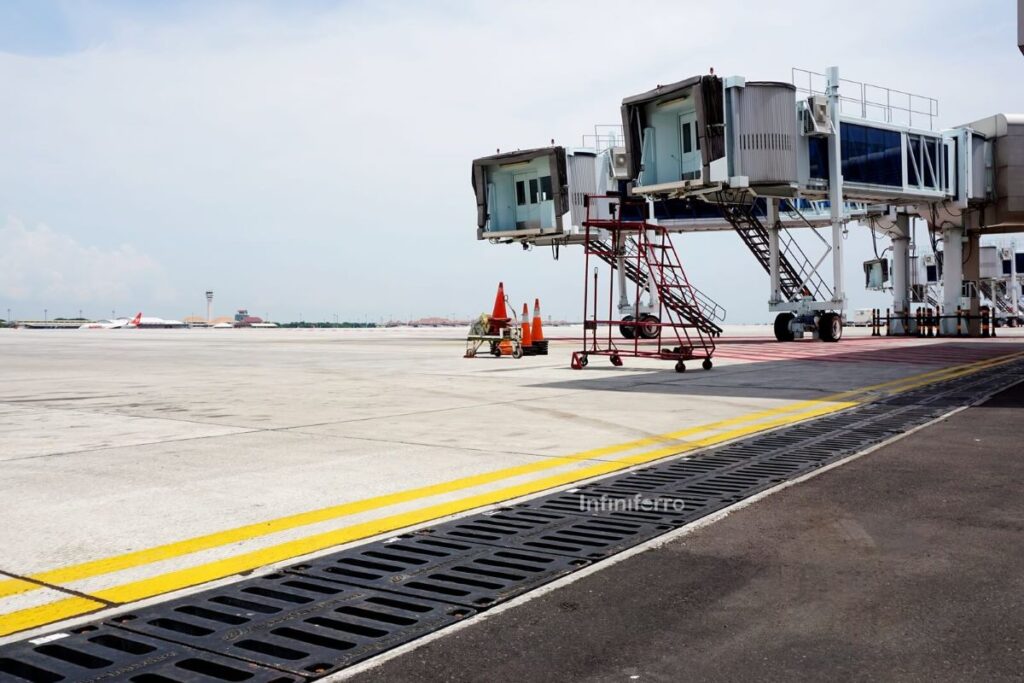
Factors to Consider When Planning Airport Drainage
Before developing an airport drainage system, several site-specific factors need to be evaluated to ensure that the design meets actual field conditions.
First, the site’s topography and ground contours must be assessed to identify the natural direction of water flow. This information helps determine the appropriate location of drainage channels and discharge routes.
Second, rainfall data and rainfall intensity must be analyzed to estimate the volume of water that needs to be collected and discharged. These calculations are essential for determining the required drainage capacity, particularly during heavy rainfall.
Third, soil characteristics and water infiltration capacity should be considered. Different soil conditions affect how much rainwater can be absorbed into the ground and how much becomes surface runoff that must be managed by the drainage system.
The airport layout is another important consideration. Runways, taxiways, aprons, terminals, and supporting buildings must all be incorporated into the drainage design. The system should integrate with existing infrastructure without disrupting aircraft movements or passenger services.
Finally, the condition and capacity of drainage outlets outside the airport boundary must also be evaluated. Water discharged from the airport should have an adequate drainage route to prevent flooding or creating additional problems in surrounding communities.
How Standing Water Affects Airport Operations
An improperly functioning drainage system can lead to various problems, with standing water being one of the most visible consequences. However, its impact goes far beyond water accumulation. It can affect flight safety, damage infrastructure, and cause delays in airport operations.
Some of the major impacts include:
1. Compromising Safety During Takeoff and Landing
Standing water on runways can reduce the friction between aircraft tires and the runway surface. This condition may cause hydroplaning, which occurs when a layer of water reduces direct contact between the tires and the pavement.
As a result, braking performance may decrease, making it more difficult for pilots to maintain control of the aircraft, particularly during landing. This can increase the safety risks associated with takeoff and landing operations.
2. Disrupting Aircraft Movements
Water accumulation on runways, taxiways, and aprons can interfere with aircraft movements. Depending on the severity of the condition, aircraft may need to reduce speed, use designated alternative routes, or wait until the affected area is considered safe.
These restrictions can extend aircraft movement times and potentially affect subsequent flight schedules.
3. Interfering with Ground Handling Activities
The apron is where various aircraft servicing activities take place, including baggage handling, aircraft towing, and refueling. Standing water in these areas can make it difficult for ground handling vehicles and equipment to operate efficiently.
Equipment such as pushback tractors, baggage carts, fuel trucks, and other ground support vehicles may experience restricted movement. This can slow down aircraft servicing and increase turnaround time.
4. Accelerating Pavement Deterioration
Water that remains on the surface for extended periods can penetrate cracks and pavement layers. Over time, this can accelerate deterioration of runways, taxiways, and aprons.
Potential damage includes surface cracking, potholes, material loss, and reduced pavement performance. If these problems are not addressed promptly, maintenance costs may increase, and airport facilities may need to be temporarily restricted for repairs.
5. Affecting Terminal Facilities and Airport Access
The effects of standing water are not limited to aircraft movement areas. Flooding in parking areas, access roads, terminals, and other supporting facilities can disrupt vehicle traffic and passenger movement.
During heavy rainfall, poor drainage around terminal access points may also affect passenger services and overall airport accessibility.
6. Increasing the Risk of Flight Delays
When standing water develops in critical airport areas, airport personnel may need to inspect the affected facilities to ensure they remain safe for use.
Runway inspections and restrictions on certain facilities can affect aircraft arrival and departure schedules. If the disruption continues, delays may extend to other flights and affect the airport’s overall operating schedule.
7. Potentially Disrupting Electrical Systems and Equipment
Water entering areas containing electrical installations can interfere with power systems, communication facilities, navigation equipment, and other operational infrastructure.
For this reason, airport drainage planning must also consider the protection of facilities and equipment that require safe and controlled environmental conditions.
8. Increasing Foreign Object Debris (FOD) Risks
Uncontrolled water flow can carry mud, gravel, rubbish, and other materials into aircraft movement areas. These foreign materials are known as Foreign Object Debris (FOD).
FOD on runways or taxiways can pose a serious hazard to aircraft, particularly when debris is ingested into aircraft engines or strikes other aircraft components.
9. Increasing Bird Strike and Wildlife Hazard Risks
Standing water can provide a water source for birds and attract other wildlife to airport areas. The presence of birds and wildlife near aircraft movement zones increases the potential for bird strikes and other wildlife-related incidents.
Proper drainage management is therefore important not only for controlling surface water but also for reducing conditions that may attract wildlife to operational areas.
The Importance of Regular Drainage Maintenance to Prevent Standing Water
Even a well-designed drainage system requires regular inspection and maintenance to remain effective. Drainage channels that initially function properly may gradually lose their capacity due to sediment buildup, accumulated rubbish, or structural damage.
Routine inspections are necessary to identify blockages, damaged sections, and obstructions along drainage routes. Cleaning activities should also be carried out regularly to maintain proper water flow, especially before the rainy season.
In addition, drainage components such as channel covers and gratings should be inspected to ensure they remain securely installed and perform their intended functions. Damaged components should be repaired or replaced promptly to prevent safety hazards and operational disruptions.
Proper maintenance helps preserve drainage capacity and ensures that rainwater can be removed efficiently from critical airport areas.
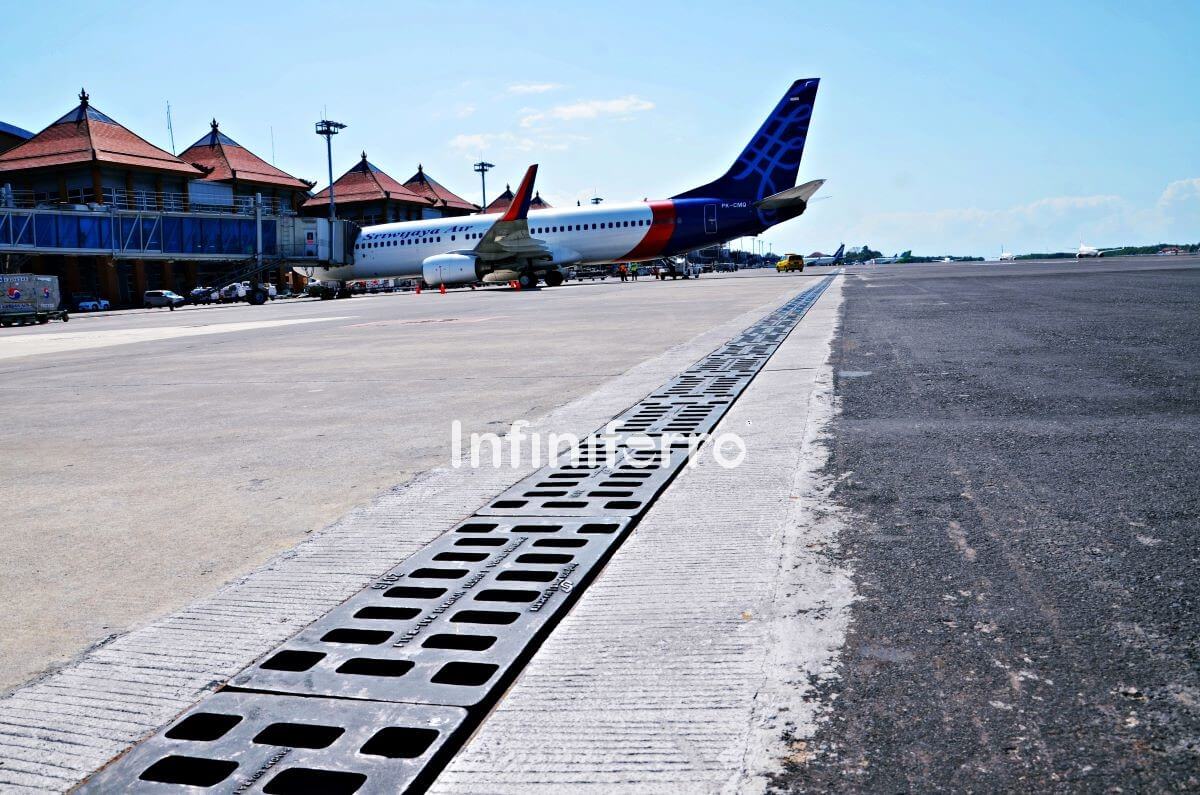
That’s why standing water can disrupt airport operations
A reliable drainage system is an essential component of airport infrastructure, supporting flight safety, infrastructure reliability, and uninterrupted airport operations. Standing water may seem like a minor issue, but it can lead to serious consequences, including reduced runway safety, disrupted ground handling activities, pavement deterioration, and flight delays.
Airport drainage systems must therefore be developed through careful planning that considers site conditions, rainfall intensity, drainage capacity, and the layout of airport facilities. Once installed, the system must also undergo regular inspection and maintenance to ensure optimal performance.
With proper drainage planning and management, airports can minimize the risk of standing water, protect critical infrastructure, and maintain safe, efficient, and sustainable flight operations.
Writer: Ayu | Editor: Hayyu
ALSO READ:






Leave a Reply