

When looking at a manhole cover, some people may consider it simply a metal cover for drainage openings or utility access points. However, behind its simple appearance, a manhole cover is actually an important component of infrastructure systems. In certain projects, its weight can reach tens or even hundreds of kilograms. So, why can manhole covers be so heavy? Is such weight really necessary? The answer is closely related to infrastructure strength, resistance to heavy traffic loads, and safety considerations.
Why Are Cast Iron Manhole Covers So Heavy?
1. Infrastructure Strength Requirements
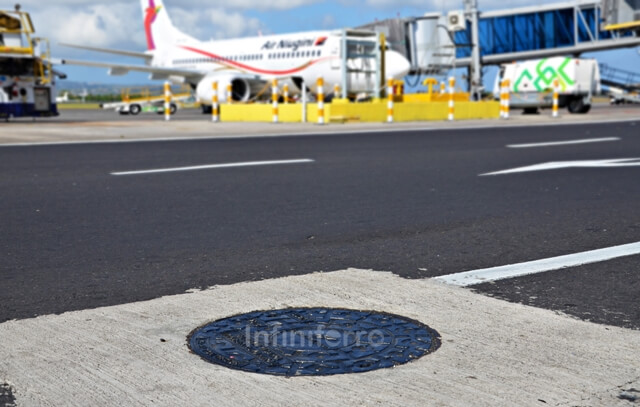
A manhole cover does more than simply cover an opening. It must be capable of withstanding various loads applied to its surface, especially when installed in areas exposed to vehicle traffic.
In environments such as industrial areas, public roads, ports, water treatment facilities, and utility projects, manhole covers can be subjected to significant pressure. Therefore, the design and materials used must be carefully selected according to the specific requirements of the project.
The weight of a manhole cover is influenced by several factors, including size, thickness, material type, frame design, and the targeted load class. As the size increases and the required load capacity becomes higher, the manhole cover generally requires stronger materials and a more robust structural design.
The use of materials such as ductile iron or cast iron allows manhole covers to achieve high structural strength while remaining suitable for various environmental conditions. However, weight is not the only indicator of quality. Design, manufacturing processes, applicable standards, and material quality also play a crucial role in determining product performance.
2. Resistance to Heavy Traffic
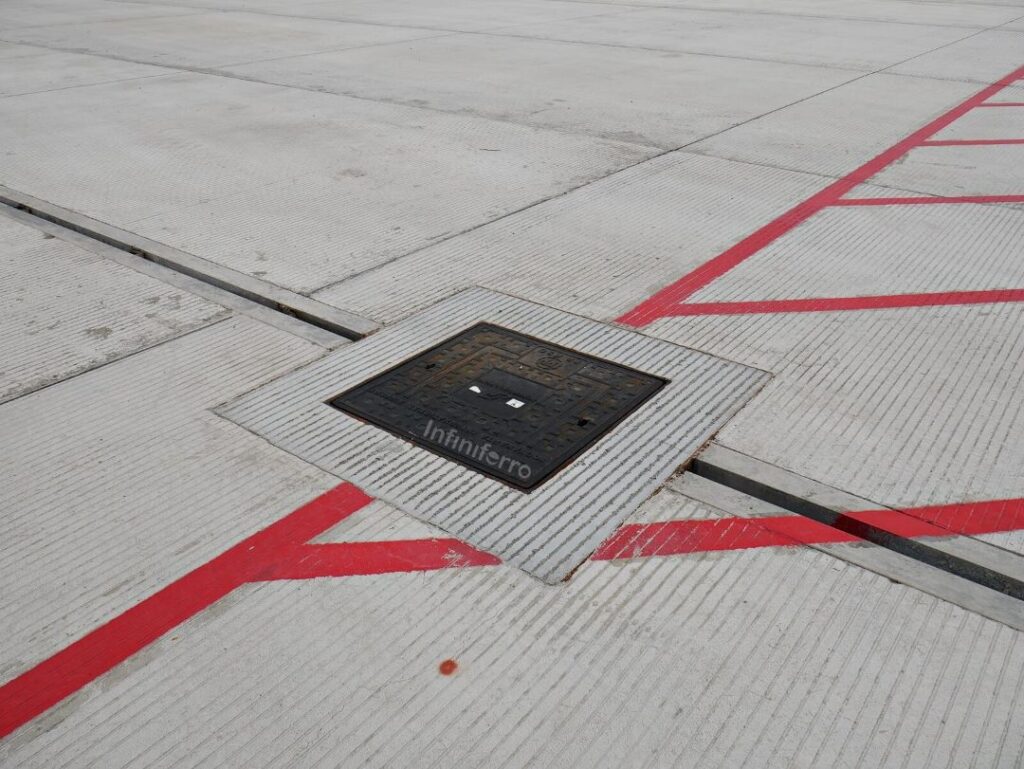
One of the main reasons manhole covers are built to be robust is because they are often installed in areas exposed to dynamic loads.
Imagine a manhole cover installed on a road that is crossed every day by trucks, buses, construction vehicles, or heavy equipment. The load it receives is not limited to the static weight of the vehicle. As vehicles move over the manhole cover, additional pressure and forces are generated by speed, braking, acceleration, and road surface conditions.
Therefore, manhole covers intended for heavy-traffic areas need to be designed according to the appropriate load class and operating conditions. A manhole cover installed in a pedestrian area will naturally have different requirements from one used on an industrial road or an area frequently crossed by heavy vehicles.
Proper construction helps reduce the risk of cracking, deformation, frame damage, or the manhole cover shifting from its intended position. Therefore, investing in a manhole cover that meets the required specifications is not simply about choosing a strong product. It is also part of maintaining the service life and overall safety of the infrastructure.
3. Safety and Anti-Theft Considerations
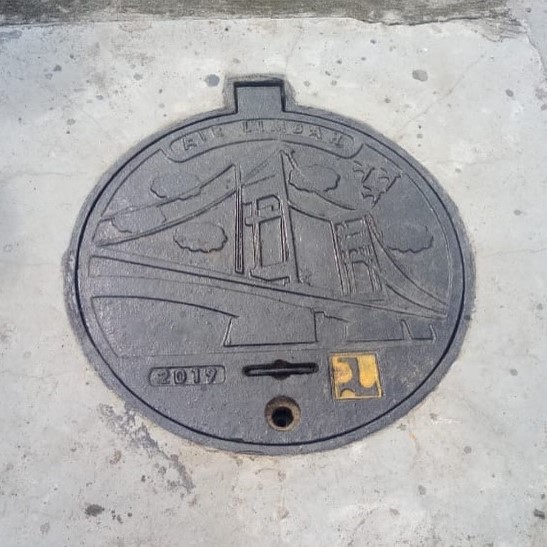
In addition to strength, the weight of a manhole cover also plays a role in security. A sufficiently heavy manhole cover is naturally more difficult to move or remove without proper equipment.
This is important because a missing or displaced manhole cover can create serious safety risks. An open manhole in the middle of a road or work area can endanger vehicles, workers, and pedestrians.
To enhance security, manhole covers can also be equipped with additional features such as locking systems, hinges, anti-slip surfaces, and specific security designs. These features can be selected according to the installation location and project requirements.
For certain projects, security is particularly important, especially in industrial facilities and areas with restricted access. A manhole cover must not only be strong enough to withstand heavy loads but also protect against unauthorized access.
But weight is not the only measure of manhole cover quality
Although a manhole cover can weigh hundreds of kilograms, it is important to understand that weight is not the only measure of quality.
A high-quality manhole cover should combine quality materials, appropriate design, suitable load capacity, precise dimensions, and controlled manufacturing processes. A product that is too lightweight for a particular application may be at risk of damage, while an unnecessarily heavy product may not necessarily be the most efficient choice.
Therefore, selecting the right manhole cover should begin with the specific requirements of the project: where it will be installed, how much load it will be exposed to, what the traffic conditions are, and which standards and specifications are required.
Writer: Chlara | Editor: Hayyu
ALSO READ:






Leave a Reply