
Metal furniture, such as cast iron and cast aluminum furniture, is a popular choice for outdoor spaces. Both materials offer unique advantages and disadvantages, making them suitable for different applications. If you’re unsure which one is the better option, this article explains the key differences between cast iron patio furniture and cast aluminum patio furniture.
5 Differences Between Cast Iron Patio Furniture and Aluminum Patio Furniture
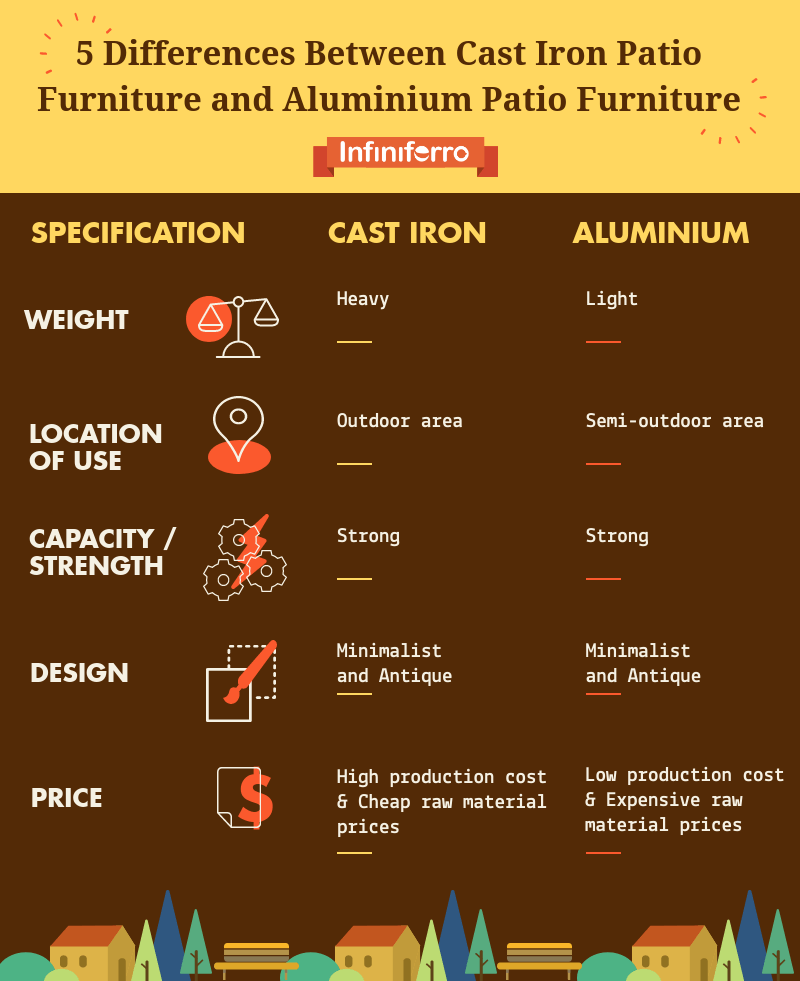
1. Weight

The most noticeable difference between cast iron and cast aluminum furniture is their weight. Cast iron is a heavy metal, whereas aluminum is significantly lighter.
Because of its lightweight nature, cast aluminum furniture is much easier to move. This makes it an excellent choice for outdoor dining areas where furniture may need to be rearranged frequently. It’s also more convenient to store during the rainy season, especially if your patio is not covered.
In contrast, cast iron furniture is much heavier, making it more stable and less likely to shift or tip over.
2. Ideal Location of Use
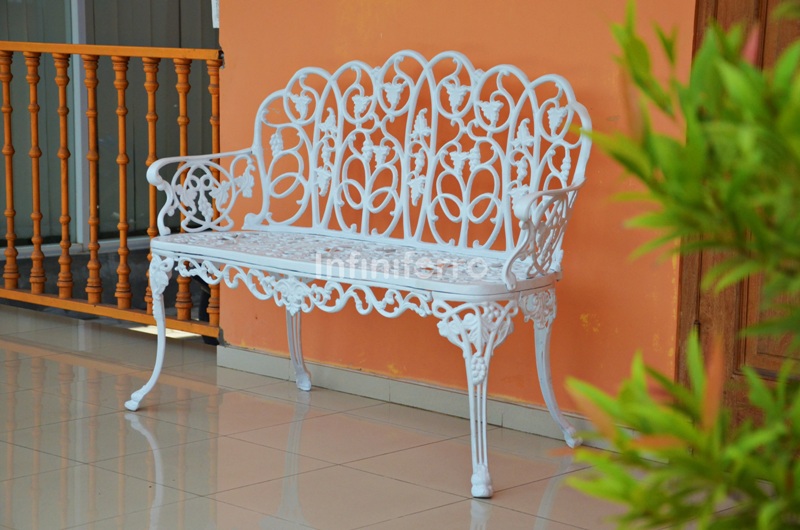
Both types of metal furniture are designed for outdoor living, but they are best suited for different environments.
Cast iron furniture is commonly used in gardens, parks, pedestrian areas, and other public outdoor spaces. It also works well in semi-outdoor areas such as balconies, terraces, and back porches.
Cast aluminum furniture, on the other hand, is more commonly used in semi-outdoor or private residential spaces.
Since cast aluminum is lightweight, it may be more vulnerable to strong winds or storms. It is also easier to move, making it less suitable for public areas where theft could be a concern.
For public spaces, heavy-duty cast iron furniture is generally the better choice because its weight provides greater stability and makes it more resistant to theft and harsh weather conditions.
To further improve the security of your outdoor area, you may also consider installing metal gates. Pedestrian gates are a popular choice for homes in and around London. They serve both an aesthetic and functional purpose and are a great way of keeping intruders out. Metal gates also have a wide range to meet every need. Whether you are looking for a stunning, high-impact design for a residential property, or made to measure metal gates in London, it can all be made according to your needs.
3. Strength and Durability: Difference Between Cast Iron & Aluminum Patio Furniture

Both cast iron and cast aluminum are strong and durable materials, making them excellent choices for outdoor furniture. Unlike wood or plastic, metal furniture is resistant to cracking under normal use.
Although aluminum is much lighter than cast iron, it still offers excellent structural strength. Both materials can easily support the weight of multiple users, making them ideal for benches, chairs, and tables.
For example, a cast iron garden bench can comfortably accommodate three to four people, while a patio dining set typically consists of individual chairs paired with a matching table.
4. Design
Cast iron and cast aluminum furniture offer similar design possibilities because both are manufactured using the metal casting process. During production, the metal is melted in a furnace and poured into molds to create intricate shapes and patterns.
Both materials are available in a wide variety of styles, ranging from clean, minimalist designs to classic antique designs with decorative ornaments and elegant curves.
If you’re looking for furniture with detailed patterns and timeless character, both cast iron and cast aluminum are excellent choices. Their casting process allows manufacturers to produce complex decorative designs that would be difficult to achieve with other materials.
Cast iron benches are often combined with teak wood for the seat and backrest to reduce overall weight while adding natural warmth. Meanwhile, cast aluminum benches are sometimes reinforced with cast iron components, particularly in the legs, to improve stability.
5. Price

Budget is naturally an important consideration when purchasing outdoor furniture.
In general, the selling price of cast iron furniture is not significantly different from that of cast aluminum furniture. Although aluminum is more expensive as a raw material, its production process is generally less costly.
Conversely, cast iron is relatively inexpensive as a raw material, but it requires a more labor-intensive manufacturing process, resulting in higher production costs.
As a result, the final retail prices of both types of furniture from outdoor furniture suppliers are usually quite similar.
Which One Should You Choose, Cast Iron or Aluminum Patio Furniture?
Both cast iron and cast aluminum patio furniture have their own advantages.
If you need lightweight furniture for a balcony, terrace, or other semi-outdoor area where portability is important, cast aluminum is an excellent choice.
However, if you’re furnishing a garden, park, commercial property, or other fully outdoor space, cast iron furniture is generally the better option. Its exceptional stability, durability, and resistance to strong winds make it a long-lasting investment for outdoor environments.
Also Read:






My dad is planning to design and create his own metal patio furniture, which is why he’s currently looking for a metal finish service that may apply Black oxide on the finished products. Well, thank you for stating here that the Aluminum furniture must be placed in the private areas of the house. It also never occurred to me that cast iron and aluminum have the same strength and durability.
Thank you for visiting infiniferro.com
Hopefully, this article is useful and can help you.
If I were to sell my sets which, would bring a higher price? Cast iron or cast Alumiumn?
Cast aluminum have a higher price